
 University Health Guide
Got your Sheffield university place sorted?
What about Meningitis B protection?
Accommodation confirmed, student loan approved, freshers’ wristband already ordered. Whether you’re heading to the University of Sheffield, Sheffield Hallam, or any other Sheffield institution, here’s what most students miss: the NHS stopped vaccinating against Meningitis B before you were old enough to benefit from it.
If you were born before May 2015, you’re heading to university halls without MenB protection. The school vaccine (MenACWY) you had in Year 9 protects against strains A, C, W, and Y — not strain B, which causes most UK meningococcal cases.
MenACWY from school does not cover strain B. Strain B is responsible for the majority of meningococcal cases in the UK. Private MenB vaccination is the only way to close that gap for current university students.
21 confirmed MenB cases occurred at a single nightclub event attended by 4,800 people — 13 of those cases were university students. The outbreak highlighted what many families had not realised: MenB vaccination is not included in the school programme, and private vaccination is the only option for students today.
At Sheffield Wellness Clinic by Totley Pharmacy, we provide private MenB vaccination for Sheffield university students and families. Two doses given six months apart, with same-day appointments available. If you’re starting university in September, ideally begin vaccination in February or March for full protection.
Serving students across Sheffield including Totley, Dore, Beauchief, Millhouses, Ecclesall, Broomhill, and surrounding areas.
Why Sheffield University Students Need MenB Vaccination
Sheffield’s two universities create a dense student population across the city. Whether you’re attending the University of Sheffield in the Western Bank area, Sheffield Hallam in the city centre, or living in student accommodation in Crookes, Broomhill, Ecclesall Road, or Sharrow — the close-contact transmission risks are identical.
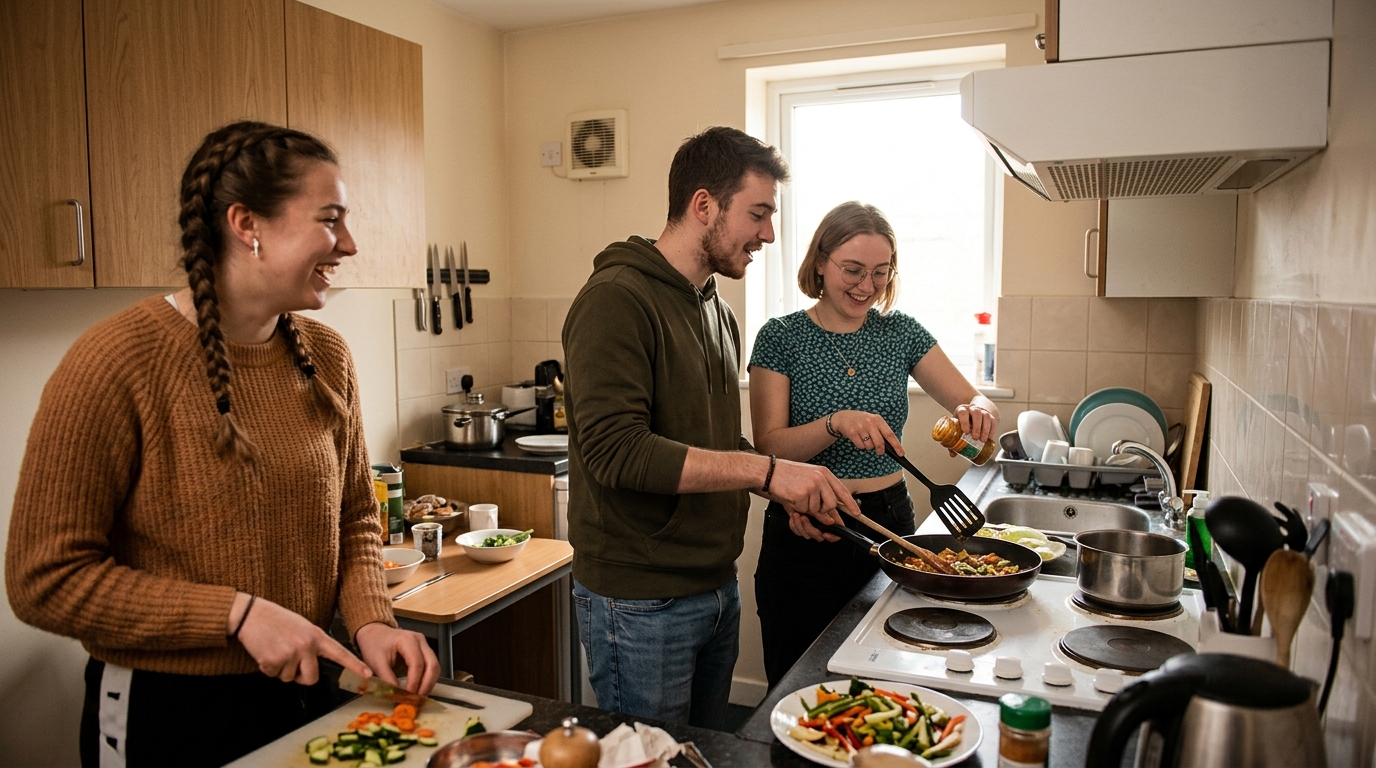
Students across Sheffield face the same exposure patterns: shared kitchens, communal bathrooms, busy social lives, and crowded public transport. The tram network and bus routes connect student populations from Hillsborough to Meadowhall, creating additional transmission opportunities during daily commutes between lectures, libraries, and accommodation.
The March 2026 Kent outbreak involved 4,800 nightclub attendees with 21 confirmed MenB cases — 13 of them university students. This demonstrates how quickly meningococcal bacteria spread in student social environments. MenB vaccination protects against the specific strain that school vaccines do not cover.

The Halls of Residence Risk
University accommodation creates ideal conditions for meningococcal transmission. Shared kitchens mean multiple people touching the same surfaces, handles, and appliances. Shared bathrooms increase exposure to respiratory droplets. Small rooms with poor ventilation concentrate bacteria. Late-night socialising involves close contact, sharing drinks, and kissing — all direct transmission routes.
During freshers’ week, you’ll meet hundreds of students from across the UK and internationally, each potentially carrying different bacterial strains. Add sleep deprivation, irregular eating, stress, and alcohol, and your resistance drops just when exposure peaks.
The Numbers Behind University MenB Risk
What the School Vaccine Actually Covers
The MenACWY vaccine you received in Year 9 protects against four meningococcal strains: A, C, W, and Y. That is important protection — but MenACWY provides no protection whatsoever against strain B, which causes the majority of UK meningococcal cases.
School vaccine vs private MenB vaccination
Protects against strains A, C, W, and Y. You received this in Year 9. Already covered.
Strain B causes most UK cases. Private vaccination only. Not covered unless you book it yourself.
You need both vaccines. MenACWY from school plus private MenB vaccination gives you comprehensive protection against meningococcal disease. One without the other leaves a significant gap.
Timing Your MenB Vaccination for University
The MenB vaccination course typically requires two doses given six months apart for optimal protection. Full protection develops approximately two weeks after your second dose. That makes timing important — particularly if you are starting university in September.
If you’re starting university in September, begin your MenB vaccination in February or March. Two doses six months apart means you’re fully protected by late September — right when freshers’ week starts.
If you need your course completed sooner, an accelerated schedule may be available. Speak to our team when you book.

Starting Later Than February?
Don’t wait until the optimal window has passed. Partial protection from your first dose is better than none. If you’re starting university in three weeks, book your first dose now and complete the course during your first term or over the Christmas break.
Some protection now is always better than no protection. If September is approaching and you haven’t started, call us on 0114 236 1070 and we’ll advise on the best schedule for your start date.
The MenB Vaccination Course
Here is exactly what to expect from your appointments and your course at Sheffield Wellness Clinic.
What to Expect at Your Appointment
Two MenB vaccine brands are commonly available in the UK: Trumenba (Pfizer) and Bexsero (GSK). These are different vaccines and cannot be mixed within the same course.
If you have already started a course elsewhere, contact us before booking to confirm which vaccine we can use. If you are starting fresh, we will let you know which vaccine we are administering when you book.
Side Effects — The Reality
Most students experience minor side effects that resolve within one to two days. Plan your vaccination for a day without important exams or major commitments, just in case you feel tired.
After Your First Dose
Book your second dose before leaving your first appointment — we will schedule it for six months later. Set a reminder in your phone. Keep your vaccination certificate safe; you will need it for your medical records and potentially for university health services.
Full protection develops two weeks after your final dose. For the standard two-dose schedule, that means two weeks after your second dose at the six-month mark.
Pricing
Contact us for current pricing
Our team will confirm the cost of your full MenB vaccination course when you get in touch. We are happy to answer any questions before you book.
Call 0114 236 1070Antibody levels may wane within one to two years after completing the course, though protection against disease may persist longer. Booster doses may be recommended for students with continued high-risk exposure. Speak to our pharmacist for personalised advice.
Recognising Symptoms Early
Even with vaccination, every Sheffield university student and their family should know the early warning signs of meningitis. Early symptoms often resemble flu — which is why the disease can progress quickly if not identified.
Seek emergency medical care immediately. Do not wait for the rash to appear — it is a late sign and may not always develop. Call 999 or go directly to Sheffield Teaching Hospitals A&E, Royal Hallamshire. Early treatment saves lives and reduces the risk of permanent disability.
University Health Services in Sheffield
When you arrive at university, do these four things before freshers’ week starts.
Register with a GP — both Sheffield University and Sheffield Hallam have on-campus health centres
Note your nearest A&E — Royal Hallamshire Hospital, Glossop Road, Sheffield S10 2JF
Save NHS 111 in your phone for urgent health advice that is not an emergency
Tell flatmates about meningitis symptoms so they can recognise warning signs in others
Common Questions from Sheffield Students and Parents
Starting university in September?
Get protected now.
Two doses, six months apart. Same-day appointments available.
Administered by GPhC-registered pharmacist Tajinder Singh.
Sheffield S17 4DR
Saturday: 9:00–13:00